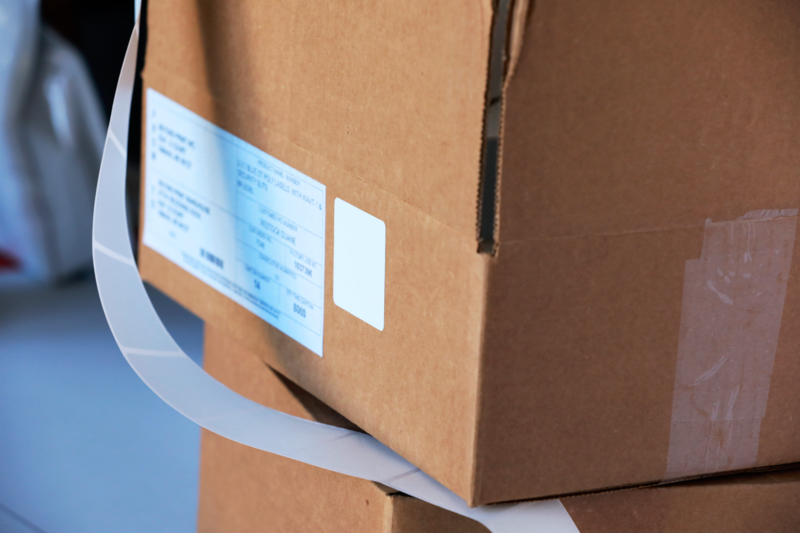
Labeling products in cold storage environments comes with unique challenges. Standard labels often fail when exposed to freezing temperatures, moisture, and condensation.
From frozen food packaging to refrigerated distribution environments, Beyond Print helps businesses nationwide choose cold storage labels designed to remain secure, readable, and reliable in demanding conditions.
Article Takeaways
Cold storage environments require labels designed to handle freezing temperatures, condensation, moisture, repeated handling, and challenging storage conditions. Standard labels often fail because their adhesives and materials are not engineered for refrigerated or freezer applications.
The right cold storage label helps maintain barcode readability, inventory tracking, compliance, and product identification throughout warehousing, transportation, and retail distribution. Proper adhesive and material selection are critical for long-term performance.
Why Standard Labels Fail in Cold Storage
Cold storage environments introduce conditions that standard labels are not designed to handle. Common cold storage issues include:
- Adhesive failure due to low temperatures
- Moisture weakening the bond
- Labels becoming brittle or unreadable
Without the right materials, labels can quickly fail and create operational issues.
What Makes Cold Storage Labels Different?
Cold storage labels are designed to perform in demanding environments. They typically include:
- Freezer grade adhesives that bond at low temperatures.
- Durable face materials that resist moisture.
- Strong adhesion on various surfaces.
These features help labels remain secure and readable over time. Learn more about Beyond Print’s cold storage label solutions.
Key Considerations
When selecting cold storage labels, consider:
- Application temperature at the time of labeling.
- Storage conditions including humidity and moisture.
- Condensation cycles during storage, handling, or transportation.
- Freezer-to-room-temperature transitions.
- Surface type such as plastic, cardboard, or metal.
- Repeated handling during transportation and storage.
Matching the label to the environment is critical for long-term performance.
Why Cold Storage Label Performance Matters
Cold storage label failure can create costly problems for businesses. Peeling, lifting, or unreadable labels can affect barcode scanning, inventory management, food traceability, warehouse efficiency, and compliance documentation.
Reliable cold storage labels help reduce operational risk and keep products identifiable, scannable, and organized throughout refrigerated storage, freezer storage, transportation, and retail distribution.
Use Cases
Cold storage labels are commonly used in:
- Frozen food packaging
- Refrigerated products
- Meat and food processing
- Warehouse and distribution environments
How to Avoid Label Failure
To prevent issues, Beyond Print recommends:
- Using adhesives designed for cold environments
- Applying labels at the correct temperature
- Choosing materials that resist moisture
- Testing labels before full production
A small amount of planning can prevent major problems once products enter cold storage or distribution. Explore Beyond Print’s full range of label solutions.
For more guidance on material and adhesive selection, read our guide to label adhesives.
Choosing Cold Storage Labels for Real-World Conditions
Cold storage labeling is not just about surviving low temperatures. It is about choosing materials and adhesives that can perform through production, storage, transportation, scanning, and handling.
With custom label capabilities, material expertise, and modern printing technology, Beyond Print helps businesses select cold storage labels designed for real-world refrigerated and freezer environments.
Frequently Asked Questions About Cold Storage Labels
Do I need special labels for cold storage?
Yes. Standard labels are not designed to perform reliably in freezing, refrigerated, or high-moisture conditions.
What is a freezer grade adhesive?
A freezer grade adhesive is designed to bond and perform at low temperatures where standard adhesives may fail.
Can labels be applied in cold environments?
Some labels can, but many require application at a specific temperature for best performance. Application conditions should be reviewed before production.
What happens if a cold storage label fails?
Label failure can lead to tracking issues, compliance problems, unreadable information, and product identification errors.
Get Labels Built for Cold Environments
Beyond Print can help you evaluate storage conditions, surfaces, application temperatures, and handling requirements to build cold storage label solutions that perform consistently throughout distribution.