In the food industry, packaging and labeling are more than just presentation. They directly impact product safety, shelf life, compliance, and customer trust.
Choosing the right combination of custom packaging and product labels ensures your product performs well in real-world conditions while standing out on the shelf.
Article Takeaways
Food packaging must balance product protection, compliance, shelf life, and branding, while labels must remain durable, legible, and compliant in actual business environments. Material selection, adhesive performance, and packaging format all directly impact overall product performance.
Flexible packaging is often a cost-effective and scalable solution for food products, while the right packaging and labeling partner helps simplify production, logistics, and long-term consistency.
Why Food Packaging Matters
Food packaging plays a critical role in protecting your product from:
- Moisture
- Oxygen
- Light exposure
- Contamination
It also helps maintain freshness and extend shelf life, especially for snack foods, coffee, and perishable items. Flexible packaging is commonly used in the food industry because it provides strong barrier protection while reducing shipping and storage costs. Explore Beyond Print’s packaging solutions.
The Role of Product Labels
Labels do more than identify your product. They must perform under real conditions. Food product labels need to:
- Remain legible and scannable
- Withstand moisture, temperature changes, and handling
- Adhere properly to different surfaces
Choosing the right combination of face stock, adhesive, and liner ensures labels stay intact from production to the consumer. Learn more about Beyond Print’s label solutions.
Key Considerations for Food Packaging and Labels
Material Selection
The materials you choose determine how well your packaging protects the product. For food applications, this often includes:
- Barrier films to protect freshness
- Durable label materials for handling and storage
- Materials suited for refrigeration or freezing
Adhesive Performance
Adhesives must match the environment your product will be exposed to. For example:
- Cold storage requires specialized adhesives that perform in freezing conditions.
- Moist environments require strong, long-lasting adhesion.
Using the wrong adhesive can lead to label failure and product issues. Explore Beyond Print’s cold storage label solutions.
Compliance and Regulations
Food packaging and labels must meet industry requirements for:
- Ingredient and nutritional labeling
- Product identification
- Traceability and scanning
- Barcode scanning and product information accuracy
Food packaging and labels may also need to comply with FDA or USDA requirements depending on the product and distribution environment.
Branding and Shelf Appeal
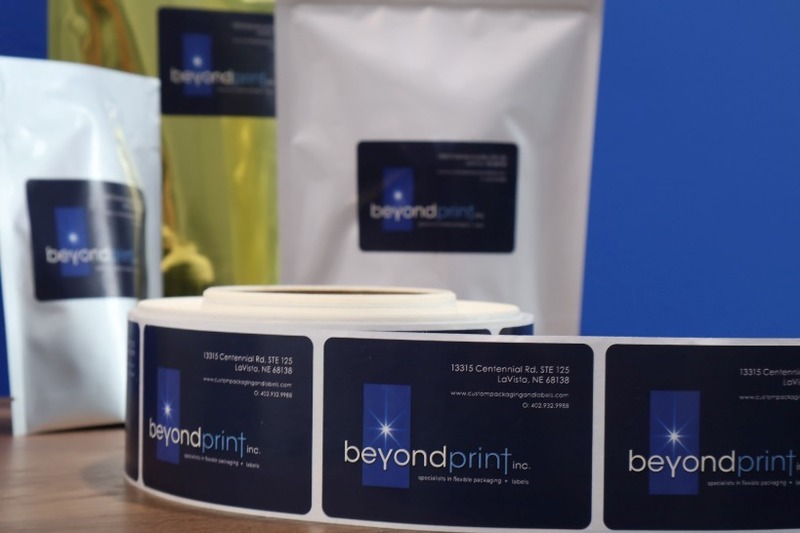
While performance is critical, presentation still matters. Custom packaging and labels allow for high-quality graphics, clear product messaging, and strong brand recognition. Beyond Print offers custom design services to help brands engage with consumers.
Why Packaging and Labels Need to Work Together
Packaging and labels work best when they are selected together. The surface material, adhesive, print method, and storage environment all need to be compatible for the final product to perform properly.
When packaging and labeling decisions are aligned from the start, brands can improve durability, maintain visual consistency, reduce production issues, and create a better customer experience.
Use Cases
Custom food packaging and labels are used across a wide range of applications:
- Snack Foods: Flexible packaging for freshness and convenience.
- Coffee Products: Barrier packaging and durable labels for quality preservation.
- Frozen Foods: Labels and adhesives engineered to perform in freezing temperatures and moisture-heavy storage environments.
- Pet Food and Treats: Packaging that balances durability and branding.
- Retail Food Products: Packaging that stands out while supporting compliance requirements.
How to Choose the Right Solution
Selecting the right packaging and labeling solution comes down to:
- Product type and shelf life requirements
- Storage conditions such as temperature, moisture, and handling
- Packaging format such as flexible or rigid packaging
- Label material and adhesive performance
- Branding and customer experience
Working with an experienced partner ensures all of these factors are aligned from the start. Learn more about Beyond Print’s approach.
With direct manufacturing capabilities and modern printing technology, Beyond Print helps food brands streamline packaging and labeling decisions from production through distribution.
Frequently Asked Questions About Food Packaging and Labels
What type of packaging is best for food products?
It depends on the product, but flexible packaging is often preferred due to its barrier protection, cost efficiency, and scalability.
Do food labels need special materials?
Yes. Food labels often require materials and adhesives designed to withstand moisture, temperature changes, and handling.
What happens if a label fails in cold storage?
If the wrong adhesive is used, labels can peel or fail. Specialized cold storage adhesives are designed to prevent this issue.
Can I customize both packaging and labels together?
Yes. Working with a single partner for both helps ensure compatibility, consistency, and better overall performance.
Build Packaging and Labels That Perform
Your packaging and labels need to perform throughout production, shipping, storage, and consumer handling, not just look good on the shelf. Our team can help you choose the right materials and solutions for your product.